Cotton Against Synthetic: What the Material Is Actually Doing in Storage
A safe keeps a gun secured and a desiccant pack manages the air. The sleeve is what actually touches the metal the entire time it is stored.
September 3, 2026 · 3 min read
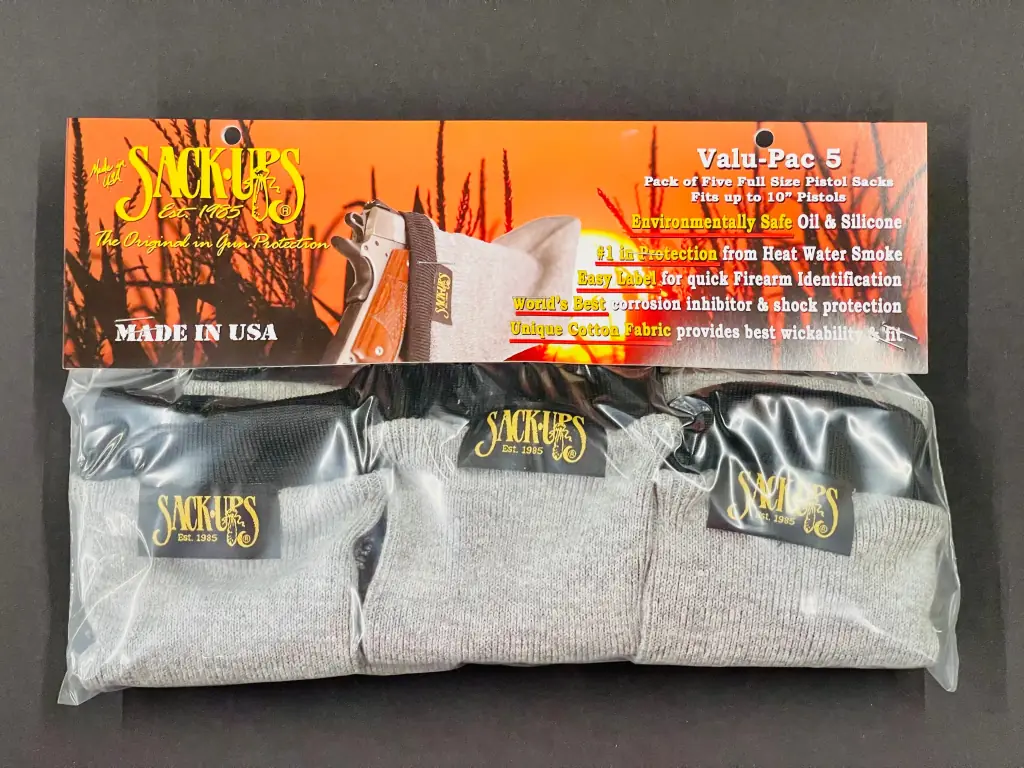
Every material that touches a stored gun, rod, bow or tool is doing something, whether the owner ever thinks about it or not. It is either helping the metal or the wood stay dry, or it is quietly working against that goal without announcing itself. The difference between a synthetic sleeve and one made from cotton is not a matter of preference or price point. It comes down to what each material actually does when it is sitting against bare metal in a closed space for weeks or months at a stretch, which is the condition almost all stored gear actually lives in, whatever the packaging on either side claims about it.
What synthetic material does under a closed lid
Vinyl, most plastics, and tightly woven synthetic fabrics share one trait that matters here: they do not breathe. Moisture that reaches the surface, whether from ambient humidity, a temperature swing, or oil vapor coming off the gun itself, has nowhere to go once it is sitting against a non-porous surface. It stays put. In a case or a safe with no airflow, that means the same film of moisture sits against the same spot on the metal for as long as the item stays stored, which is often the better part of a year. A tightly sealed synthetic sleeve can even make this worse in one specific way: if it seals closely around the gun, it can trap whatever moisture was already present at the moment it went in, holding it against the surface instead of letting it move or evaporate.
What cotton does instead
Cotton is a natural fiber, and natural fibers are porous by structure rather than by treatment. Moisture that reaches a cotton surface moves through the fabric rather than sitting on top of it, spreading out and evaporating instead of staying concentrated against one point of contact on the metal. That spreading and releasing behavior is the basic mechanism behind calling a fabric a wicking material. Silicone treatment adds a layer on top of that base behavior: it gives the cotton some water resistance and a smoother feel against metal, without sealing the fabric closed the way a synthetic coating would. Sack-Ups has built every firearm, knife, rod and reel, archery and woodworking sleeve this way since 1985, silicone-treated cotton rather than a straight synthetic shell, under the registered line The Original in Gun Protection.
What the company's own packaging claims
Sack-Ups retail packaging carries the line Number 1 in Protection from Heat, Water, Smoke, alongside a claim of environmentally safe oil and silicone treatment. Those are the company's own words on their own product card, offered here as exactly that, not as an independent lab result. What a customer can weigh alongside it is an account like Joel Gross's: four guns that were in Sack-Ups came through a house fire looking, in his words, like they had never been near it. He credited the sleeves with saving what he called four very treasured old friends, and thanked the company by name for it.
Why this matters more than it seems to at first
None of this is complicated chemistry. It is closer to the difference between a raincoat that breathes and one that just traps sweat against your skin instead. The material touching a stored gun for months at a time is doing far more of the protective work than most owners assume, more than the safe itself, more than a desiccant pack sitting in the corner doing its own separate job. The safe keeps the gun secured. The desiccant manages the air in the room around it. The sleeve is what is actually in contact with the metal the entire time, which is exactly why the material it is made from is not a small choice buried in the fine print.
Getting the material right does not do much good if the length is wrong, since a sleeve that leaves the muzzle or the grip exposed is not protecting the part of the gun that needed it most. The guide to picking the right length for what you own covers the full range Sack-Ups stocks, and the piece on rust inside a closed safe goes deeper into why a sealed, humid space behaves the way it does in the first place.
Sack-Ups, 877.213.6333
Call 877.213.6333More articles
Why Firearms Rust Inside a Closed Safe (And What Actually Helps)
The door being shut is not the same thing as the inside being dry. Most rust starts on guns that never left a locked, climate-controlled safe.
How to Choose the Right Length Sack-Up for What You Own
The wrong length is the most common reason a protective sleeve stops doing its job. Here is how to match the model number to the gear.