Why Firearms Rust Inside a Closed Safe (And What Actually Helps)
The door being shut is not the same thing as the inside being dry. Most rust starts on guns that never left a locked, climate-controlled safe.
September 3, 2026 · 4 min read
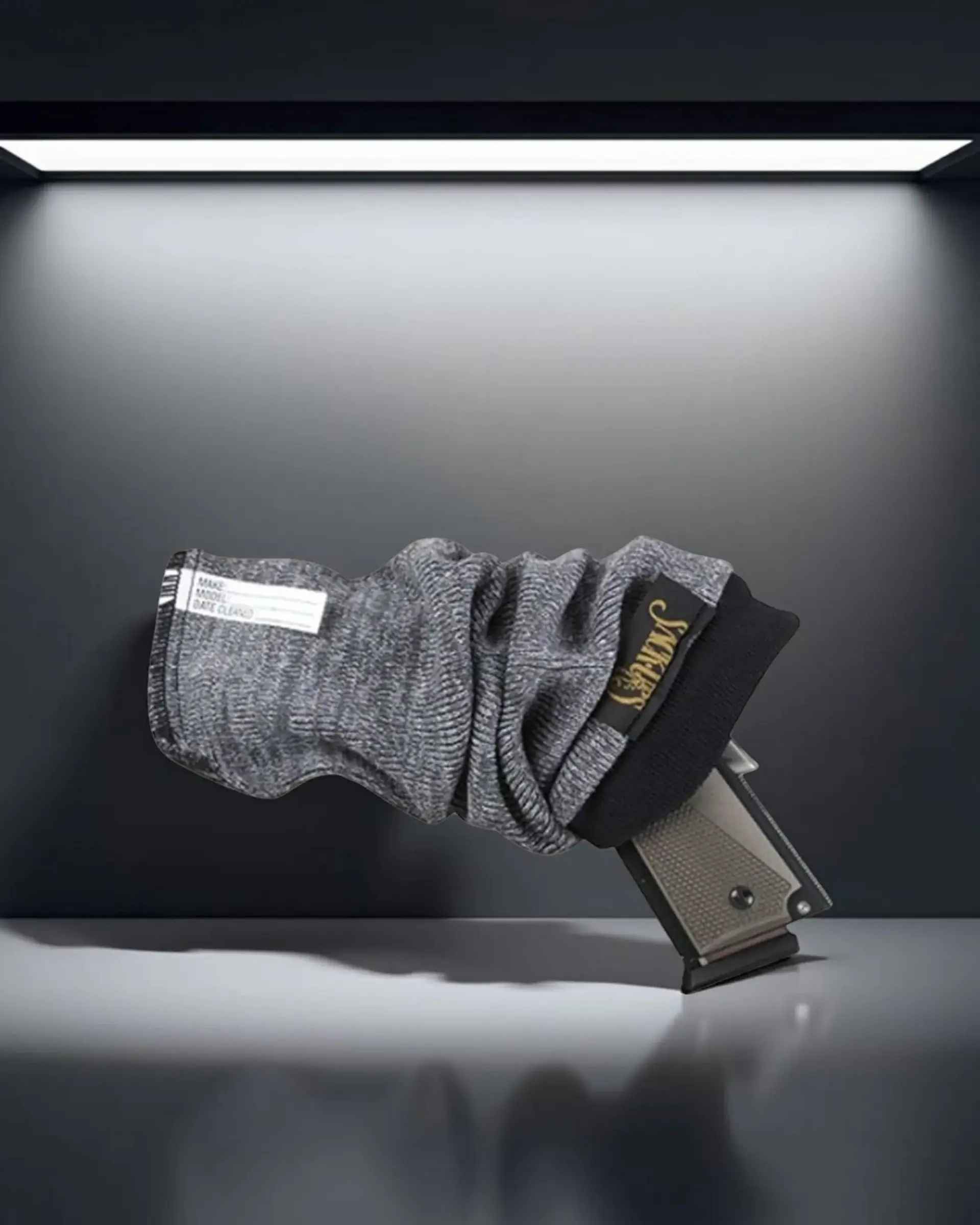
A safe door closes with a solid sound, and that sound tells most owners the job is done. The gun is dry, it is locked up, and the outside world cannot get to it anymore. Then a few months later a shelf gets pulled out for a look, and there it is: a dull haze across the bluing, or worse, a pit starting on the barrel or on the underside of the receiver where nobody was looking. It happens inside safes that were never opened, never exposed to weather, kept in a climate-controlled house the whole time. The moisture that caused it was never on the outside of the safe to begin with. It was already in there, and a closed door did nothing to stop it, because a closed door was never the thing keeping moisture out in the first place.
Why a sealed safe traps moisture instead of keeping it out
A gun safe is close to airtight by design, and that is exactly what makes it a problem for moisture rather than a solution to it. The air inside carries some amount of water vapor no matter how dry the room feels, and that vapor does not go anywhere once the door is shut. Steel gives that vapor somewhere to land. When the temperature in the room swings, a cool morning after a warm evening, a garage that heats up in the afternoon sun, the metal inside the safe changes temperature faster than the air around it does. Warm, humid air meeting a colder metal surface condenses, the same way a cold glass sweats on a summer porch. That condensation is not dramatic. It is a thin film nobody sees forming, and it can sit directly on bare steel for as long as the safe stays shut, which for most owners is most of the year.
Desiccant helps. It is not the whole answer.
Silica gel packs and rechargeable desiccant dehumidifiers pull moisture out of the air inside a safe, and that is real, useful work. What they do not do is anything about direct contact. A barrel resting on a felt-lined shelf, or leaning against a cardboard box, or sitting bare against a steel gun rack, is touching a surface that can hold its own moisture regardless of how dry the surrounding air gets. Desiccant also has to be maintained. A silica pack that saturated eight months ago and was never recharged is not protecting anything, it is just sitting there looking like it is. The air in a safe can be perfectly dry and a gun can still rust if the thing actually touching it is the problem, which is a distinction most storage advice skips entirely.
The layer touching the metal is what matters most
This is the part that usually gets left out. What matters most is not only the humidity of the room, it is what is in direct, sustained contact with the metal for months at a time. A sleeve that does not breathe, a stiff vinyl case liner or a tightly sealed synthetic sock, can trap whatever moisture is already present against the surface instead of moving it away from it. Cotton behaves differently. It wicks moisture off a surface rather than sealing it in against the metal. Sack-Ups has built its sleeves out of silicone-treated cotton since 1985, out of Morganton, North Carolina, under the registered line The Original in Gun Protection, on the idea that the fabric touching the gun should pull moisture away from it, not hold it there for the season.
Larry Lee, a longtime customer, put close to 30,000 miles on the road across the country with his guns kept in Sack-Ups the whole way. By his own account, not one of them rusted or picked up a scratch over that distance. Sid and Sandra Whitson from the Southeast had a rougher test than most owners ever will: their safe came loose in transit and wheeled down the interstate, tearing up the outside of the safe itself and the wooden shelving inside it. By their account, the Sack-Ups still did their job, and the guns inside came through protected while the safe around them did not. Neither story is a guarantee for every situation. Both are what two customers actually saw happen to their own gear.
What this looks like day to day
- Cover the full length of the gun, not just the exposed section. Moisture finds the gap you leave uncovered.
- Wipe a gun down before sleeving it if it has been handled, cleaned wet, or carried through humid air recently.
- Give the safe itself some airflow or a desiccant rod too. A sleeve is not a substitute for basic safe care, it is what handles the surface the desiccant cannot reach.
- Check on stored guns now and then. A sleeve nobody ever looks at is still a sleeve worth looking at once in a while.
Getting this right starts with fit. A sleeve that is too short leaves a barrel or receiver exposed at exactly the point where condensation forms first, and the guide to picking the right length for what you own walks through the sizes Sack-Ups actually stocks, from compact pistols to break down shotgun barrels. For a closer look at why cotton behaves so differently from synthetic material in the first place, the piece on cotton against synthetic covers the mechanics in more depth.
Sack-Ups, 877.213.6333
Call 877.213.6333More articles
How to Choose the Right Length Sack-Up for What You Own
The wrong length is the most common reason a protective sleeve stops doing its job. Here is how to match the model number to the gear.
Cotton Against Synthetic: What the Material Is Actually Doing in Storage
A safe keeps a gun secured and a desiccant pack manages the air. The sleeve is what actually touches the metal the entire time it is stored.