How to Choose the Right Length Sack-Up for What You Own
The wrong length is the most common reason a protective sleeve stops doing its job. Here is how to match the model number to the gear.
September 3, 2026 · 4 min read
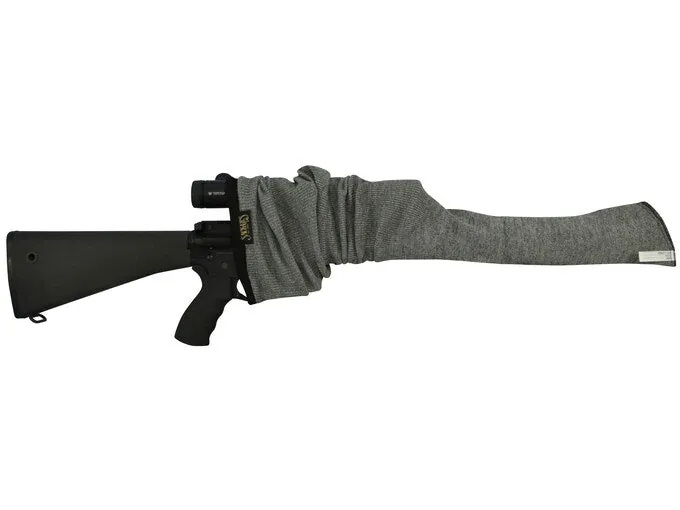
Sack-Ups makes sleeves in a specific range of lengths for a reason. A rifle sleeve pulled over a compact pistol bunches at the muzzle and leaves the grip exposed. A pistol sleeve forced onto a break down shotgun barrel will not close at all. Getting the length right is not a small detail, it is most of what makes a protective sleeve actually protective, since the whole point is full coverage of bare metal for months at a time, not partial coverage of most of it. Sack-Ups stocks lengths at 6, 8, 10, 13.5, 16, 17, 24, 36, 40, 42, 48, 52, 66 and 72 inches, with custom lengths available on request for anything that falls outside that standard run. Here is how to match what is already in the safe or the case to what Sack-Ups actually offers.
Measure before you buy, not after
The fastest way to get this right is to measure the gun itself before choosing a model number, rather than guessing off the general category it falls into. Lay a rifle or shotgun flat and measure stock to muzzle. For a pistol, measure grip to muzzle including any optic or compensator mounted on top, since that adds length the bare frame measurement misses. For a break down barrel and receiver, measure each section separately, since they are sized and sold as two different sleeves rather than one. A tape measure takes thirty seconds and removes the guesswork that leads to buying the wrong length twice.
Rifles and shotguns
Model 100, at 52 inches, is the length Sack-Ups points most rifle and shotgun owners toward first, and for a standard length long gun it is usually the right call straight off the shelf. Model 104 is built at that same 52 inches for a large scoped rifle or an AR-15 pattern rifle, where an optic sitting up off the receiver needs a little more room inside the sleeve than a bare barrel does. Both are cut for a full length gun, stock to muzzle, not a folded or broken down one, and both come in gray, black or green depending on the model.
Carbines and AR-15 style rifles
A shorter rifle does not need a 52 inch sleeve, and forcing one on just leaves excess fabric bunched at the end where it can catch on a shelf or a rack. Models 104, 106 and 110 are built specifically for shorter carbines and AR-15 pattern rifles, with Model 106 cut at 42 inches for a carbine or short rifle body. If a rifle sits noticeably shorter than a standard hunting long gun once the stock is collapsed or the barrel is trimmed for a carbine build, one of these three is almost always the closer fit than the full length options above.
Handguns, full size and compact
Model 200, at 13.5 inches, fits most pistols and revolvers and is the default starting point for a standard handgun. Compact and subcompact handguns run shorter than that, and forcing them into a 13.5 inch sleeve leaves loose fabric bunched at the muzzle end, which is exactly the kind of gap moisture finds first. Models 203, 216 and 218 step down through 10, 8 and 6 inches for compact and small compact pistols. A scoped handgun or a longer barrel target pistol needs the other direction entirely: Model 204, at 17 inches, is built for a large or scoped pistol where a standard 13.5 inch sleeve would come up short at the optic.
Break down barrels, black powder and bows
A break down or over and under shotgun stores in two pieces, and each piece gets its own sleeve rather than one long one stretched over both. Models 511 and 523 cover the barrel at 36 inches, and models 512 and 524 cover the receiver at 24 inches. Black powder long guns run longer than a standard modern shotgun, and Model 507 is cut at 66 inches to match that extra length. Traditional bows follow the same logic in a different category entirely, sized for the bow rather than a firearm: Model 501 at 66 inches and Model 502 at 72 inches, both built for a strung or unstrung traditional bow rather than a compound bow with cams and cables in the way.
Sack-Ups puts it simply on their own buyer's guide: when in doubt, give your gear a little extra room. A sleeve with an inch or two to spare closes easily and still does its job fully. One that is a size too small will not close right at all, and gear that is not fully covered is exactly where rust and moisture start, which is the whole subject of the piece on why firearms rust inside a closed safe. Off season storage brings its own version of the same sizing question, covered in the piece on storing gear that only comes out part of the year.
Sack-Ups, 877.213.6333
Call 877.213.6333More articles
Why Firearms Rust Inside a Closed Safe (And What Actually Helps)
The door being shut is not the same thing as the inside being dry. Most rust starts on guns that never left a locked, climate-controlled safe.
Cotton Against Synthetic: What the Material Is Actually Doing in Storage
A safe keeps a gun secured and a desiccant pack manages the air. The sleeve is what actually touches the metal the entire time it is stored.